
-

Critical Minerals and Energy Transitions: Towards Ecosocialist Alternatives
•
We are told that prospects for energy transitions depend on rapidly expanding the extraction of so-called “critical minerals.” It is imperative that ecosocialists critically interrogate these claims, especially the projected demand for these materials. This review article presents several major anticipated contributors to “critical minerals” demand and outlines some ecosocialist alternatives to reducing these…
-

Global Structure of Dependency and Socio-ecological Crisis: Intersecting Delinking and Degrowth for an Ecosocialist Transition
•
ABSTRACT Neoliberal globalization has led to a functional differentiation between an extractive periphery providing natural resources and a productive periphery providing labor for capital accumulation in the center through unequal exchange. The global structure of dependency inherited from colonialism has not been substantially altered, thus challenging the development strategies of peripheral countries. The question…
-
Scenes from a Nightmare: The Imperialist Construction of Israel
•
Published in Capitalism Nature Socialism, 13 (3), September, 2002
-

-
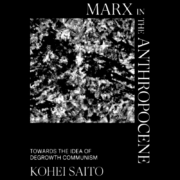
Marx in the Anthropocene: Towards the Idea of Degrowth Communism
•
The central case in Saito’s new book is that the more Marx learned of the metabolic rift, the more he embraced ecological and anti-colonial positions until ultimately he arrived at “degrowth communism.”
-

A Critique of “Speculative Commodities”: Rethinking the Value and Commodification of Gem-Resources Under Extractive Capitalism
•
The process of diamond and gemstone commodification masks the exploitation of labour and the extractive practices that wreck the ecology and impair the health of local populations, and have a particularly debilitating effect under neoliberal extractive regimes and regulations.
-
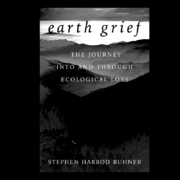
Earth Grief: The Journey Into and Through Ecological Loss
•
Beautiful, powerful, and edifying, Stephen Buhner’s book is recommended to everyone who has felt the full scope of the environmental crisis and wants, at the very least, to encounter someone else who has faced the abyss of grief and has some insights about how to live with it.
-
Ecosocialists and Degrowth Advocates Should Work Together
•
Arguing for transitional transformative progressive change should be a joint undertaking. That includes the reduction in the size of or elimination of environmentally destructive sectors as well as democratizing the relations of production. We need both.
-
Common Strategies for Eco-Feminists and Eco-Socialists: An Introduction to the New Co-Editors in Chief of CNS
•
As the new Co-Editors in Chief of CNS, Leigh and Danny are committed to further extending the journal’s anti-racism and anti-war themes, extending an ecosocialist ecofeminist lens to analyze current conflicts, and advancing a democratic, ecosocialist politics.
-
Celebrating Silence
•
Blood in veins has clotted We have nothing to say Silence rages like a storm Only silence fights monsters No one can ever know What’s happening within Blood-suckers play kabaddi With guns in their hands Sludge and sanies in minds Hyenas in woods realize too They’ve a fringe to licence But parasites cross the…
-
Ecologically Unequal Exchange Theory: A Rejoinder to Hornborg
•
Hornborg misunderstands or misrepresents the labour theory of value and Marx’s critique of political economy. Sadly, we have seen this before in the pages of this journal – for example, the debate between Kallis and Swyngedouw and the critique of Kallis by Schwartzman and Mauro. Even though I thought I clearly stated Marx’s distinction…
-
Green New Deals: What Shapes Green and Deal?
•
Based on publicly available documents, with advice from some activists involved in Green New Deal agendas, this article analyses how political processes have mutually shaped Green and Deal, involving tensions between system change versus continuity.
-
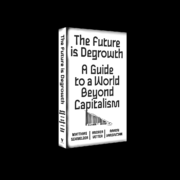
A Glimpse of a World Beyond
•
The Future is Degrowth recommends practical proposals for degrowth, and while the authors recommend a lot of things which would be vast improvements over what we have now, they don’t really know how it’s going to happen, and so what we can expect is a conflict-ridden and untidy process.
-

Veganism as Left Praxis
•
Veganism should be enacted broadly on the Left as a praxis not only of anti-speciesist or animal-rights-motivated politics, but also broader politics of anti-capitalism and liberation.
-

Essence, Alienation and Animal Liberation: Toward a Humanism for Non-Humans
•
We can distinguish between two forms of humanism in the Marxian tradition and locate the conceptual space occupied by animals in each, providing valuable conceptual tools for critical animal studies to employ.
-

The Zoological Marx
•
Thinking about animals as a class, with common interests and common suffering, enables us to see suffering and exploitation as results of a larger system, not particular acts of cruelty.
-

Health and Environmental Justice Struggles in America’s Prisons During a Global Pandemic
•
Mass incarceration is anathema to the pursuit of public health and environmental justice because carceral systems are inherently anti-ecological and produce illness and disease within and beyond the walls of confinement.